

There’s a lot even our best neuroscientists don’t know about the human brain. How can we have any reasonable hope for preservation given those unknowns? What if there are crucial memory mechanisms that are so poorly understood, we don’t even know to check whether our methods preserve them? As it turns out, there’s some interesting empirical evidence about the general shape, and limits, of those unknowns.
In Ted Chiang’s short story Exhalation, a race of aliens have brains which run on compressed air, performing computations and storing information in elaborate arrangements of hinged gold-foil leaves. The leaves are held in position by a constant stream of air flowing through the brain’s tubules, encoding alien thoughts and memories. That ephemeral suspension pattern is the whole self—any alien whose supply of compressed air runs out is reduced to a catatonic state, all of their memories erased as the gold-foil leaves hang limply down. Even if air pressure is restored, the original information is lost for good. The person can never be recovered.
If this was how brains worked in our world, I’d be working on a very different kind of preservation. I might need to throw my hat in with the longevity researchers, or try to invent some kind of relativistic time-dilation bubble. I think we got lucky, though: when we look at electrical blackouts in the human brain, we observe something much more convenient.
The lady in the lake
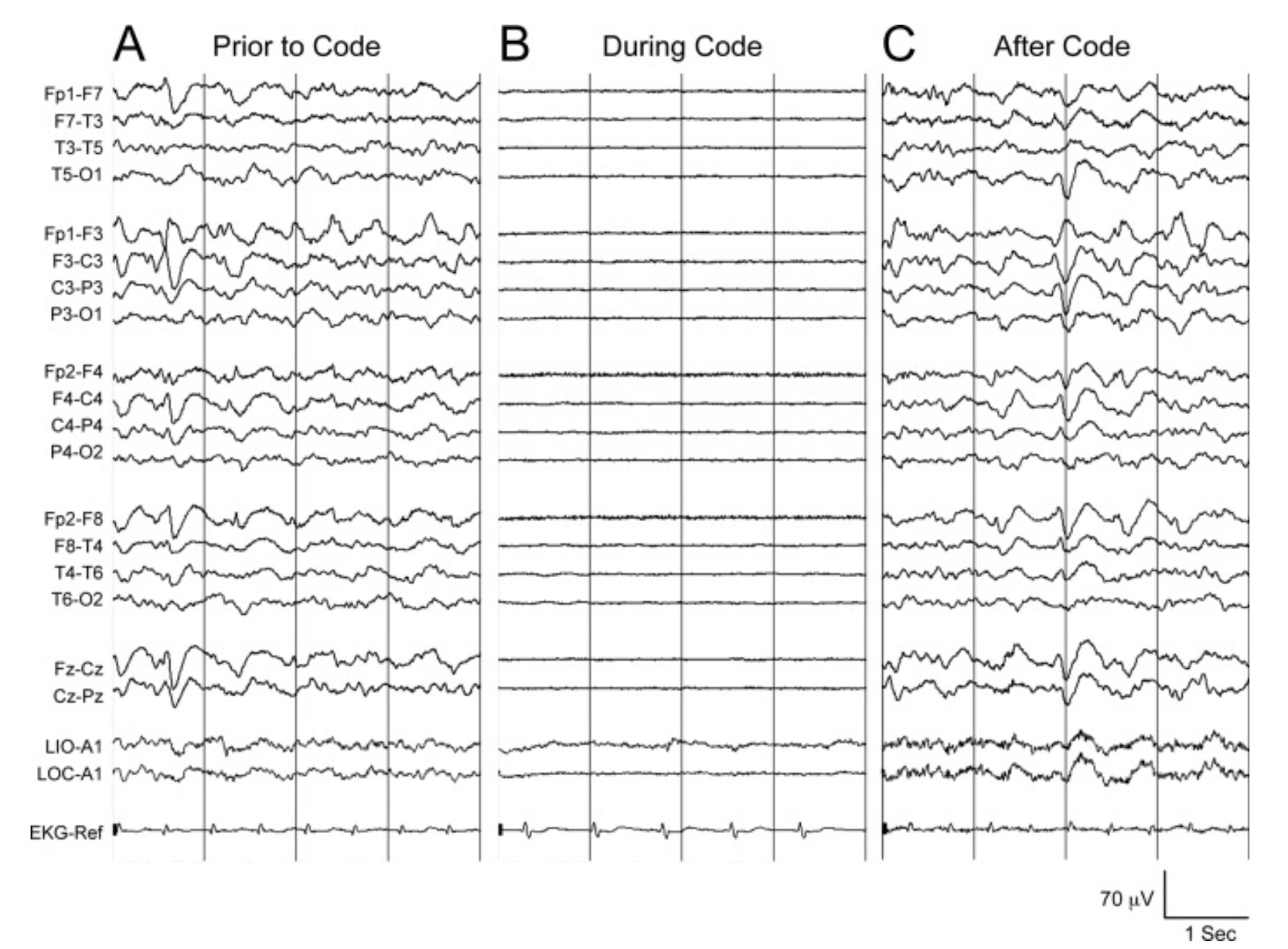
In 1999, a Swedish radiologist named Anna Bågenholm fell into a frozen lake while skiing and became trapped under an eight-inch-thick layer of ice. For forty minutes, she struggled to breathe from a trapped air pocket before finally losing consciousness. At that point, her breathing stopped, her heart stopped pumping blood, and her brain went dark as electrical activity ceased—not like the quiet of sleep or even a coma, but complete electrocerebral silence. And then it took nearly an hour after that before rescuers managed to pull her body out of the water.
But this was not the end. Her rescuers airlifted her body to a hospital where—after two and a half hours with zero heartbeat—doctors attempted to carefully rewarm her. The operation took nine hours, but in the end, she survived. Even more remarkably, she made essentially a complete recovery, with no lasting brain damage save for the loss of some immediate short term memory, and no lingering problems save for some nerve damage in her hands and feet.
So a person who fell into a frozen lake, spending an hour with zero vital signs and a core body temperature of 57 °F/13.7 °C, survived the experience. The mishap was a freak accident, but the astonishing fact that recovery is possible tells us something about how brains work. Bågenholm’s case should already make us suspicious of any theory where—like the unfortunate gold-foil leaves in Chiang’s pneumatic aliens—the ephemeral live activity of the brain is load-bearing for memory and personal identity. This situation looks like the sort of thing you’d expect to observe in a universe where brains can safely be turned off and back on again. Whatever consequences Bågenholm may have suffered from her accident, she certainly seemed to emerge with her memories, cognition, and personality intact.
Using cold to save lives: DHCA
How is such survival possible? Of course, at ordinary warm temperatures, we can only go a few minutes without oxygen before suffering lasting catastrophic damage—hence the debilitating consequences of heart attack and stroke. But cold-water survival, which has been documented since ancient times, is another story. It turns out that a warm, oxygen-starved brain quickly begins to damage itself. While you’d ideally like your brain to have all the oxygen it wants, the next best thing is to avoid trying to run it—just like you’d power off your phone if you spilled a glass of water on it. It turns out that cold temperatures (about 15-30°C) are very effective at powering down brains in this way.
In fact, once you know the phenomenon exists, powering down brains turns out to be a useful technology—specifically for brain and heart surgeons whose operations depend on being able to work on a brain or heart while it is temporarily offline. The heart does not try to pump blood, the brain does not spark with electricity, and yet the body does not suffocate from the resulting lack of oxygen. Hence the technique of hypothermic circulatory arrest (HCA) was developed.1 Before an operation, surgeons lower the body’s temperature until circulation stops, usually targeting 20-28°C (moderate hypothermic circulatory arrest, MHCA) or in some cases as low as 14-20°C (deep hypothermic circulatory arrest, DHCA). This extreme cooling buys a window of time in which all normal vital signs are suspended—heartbeat stops, breathing stops, the brain becomes quiet—and the delicate surgery can take place. After the procedure is complete, the patient is carefully, slowly warmed and resuscitated, and they return to everyday life.
Hypothermic circulatory arrest provides cerebral protection during an extended period without oxygen or blood flow. For this reason, it has become the standard of care (Chau, 2013) for heart and brain operations since it was developed in the 1960s: for example, over 7,000 patients in the US underwent hypothermic circulatory arrest procedures between 2017 and 2021.
So how do patients fare afterwards? Do they survive with their memories, cognition, and personalities intact? In fact, in addition to the anecdotal experiences of patients and surgeons in the field, there’s plenty of literature evaluating the effects of DHCA on cognition. For example, Stecker et al. (2001) (Part II) survey 109 patients immediately after DHCA and find that 75% are aware, oriented, and neurologically normal. This doesn’t seem bad, among a population of very ill and immediately post-operative people, several of whom suffered strokes before or during the procedure.
More to the point, Percy et al. (2009) studied people in high-cognitive professions who underwent DHCA. Included in the group were “physicians, lawyers, doctorates, clergymen, artists, musicians, accountants, and managers”. The researchers interviewed both patients and their close family members, asking what differences they noticed before and after the surgery. The researchers found “excellent preservation of cognitive function after surgery, according to both patient and informant responses,” arguing that “although subtle deficits after DHCA might hide in individuals with less intellectually demanding professions, it is unlikely that substantive deficits could remain undetected in our high cognitive needs group.”
I still remember the first time I ever heard about DHCA: a brief digression during a TA session that was part of Sebastian Seung’s Intro to Neuroscience class at MIT, 2009. I still remember that day, because learning about DHCA was literally life changing for me. I learned that people can be “shut down” by cold, that they don’t have any appreciable brain activity in such a state, that this was still being used in hospitals routinely for tricky heart surgeries! For me, DHCA was one of those things that, once you see it, even for a moment, your life can never be the same again. I left that TA session in a haze. I hope to share some of that excitement with you today.
Electrocerebral silence
As a technical aside, I want to dive into the term electrocerebral silence—the electrical-blackout phenomenon observed in brains under hypothermic circulatory arrest. Although in cooled brains, electrical activity shuts down to the point that it’s undetectable on a standard EEG (unlike the gentle characteristic waveforms of an anesthetized or unconscious brain, electrocerebral silence looks like a total flatline; see Mizrahi et al. 1989.), the point isn’t the total absence of electricity. Brain cells, being bags of ions, may still occasionally emit tiny, sporadic sparks. The point is that they are totally disrupted in their ordinary electrical behaviors, unable to perform anything like normal synaptic computations (Volgushev 2000), and operating at levels so low they are invisible under EEG.
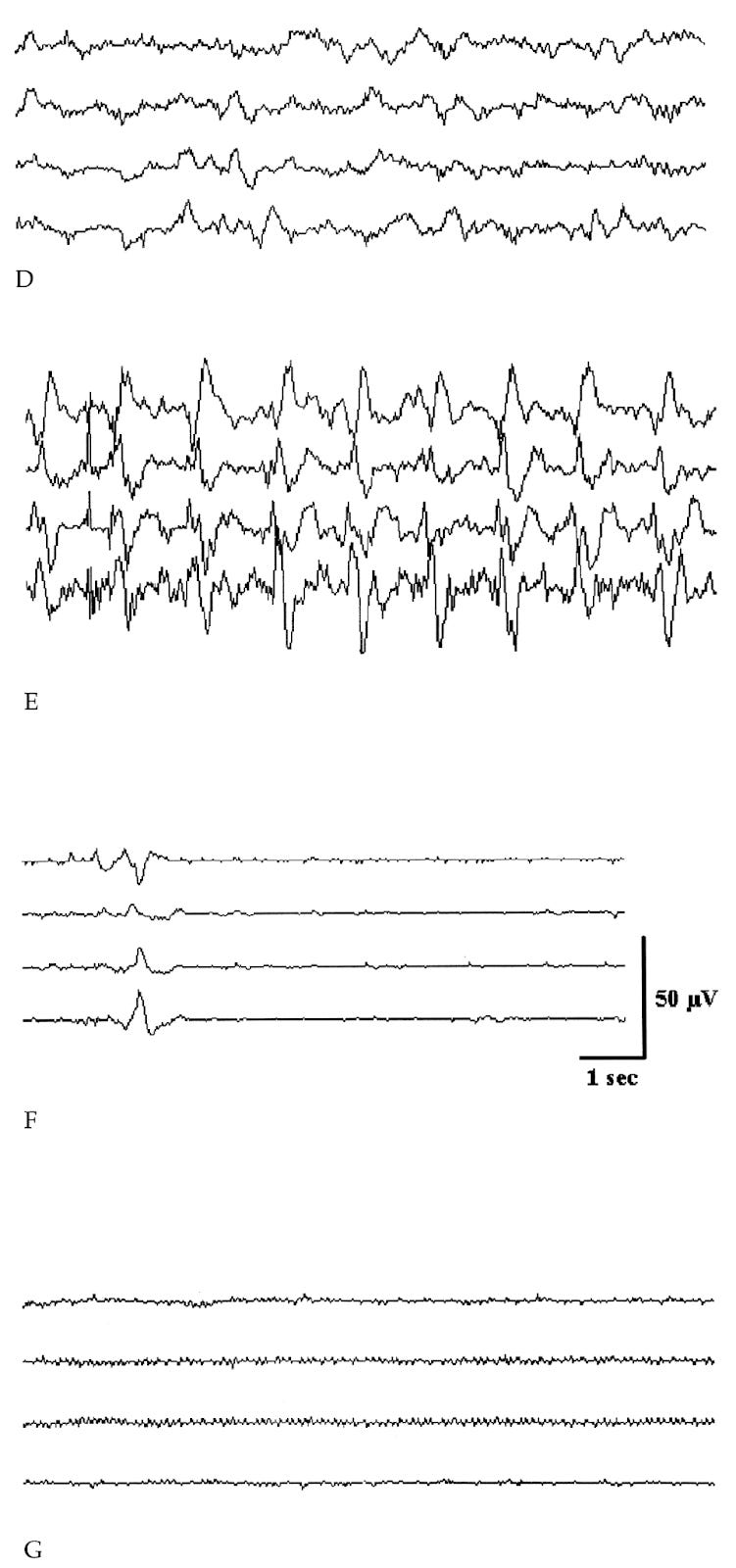
Stecker et al. (2001) tried deliberately super-stimulating neurons in chilly hypothermic brains, inducing evoked potentials by stimulating the wrist using a current 10-50x larger than a normal nerve signal. They found that even these oversize pulses petered out before reaching the cortex, indicating that the signaling pathways through the deep brain had been disrupted. The neurons had lost their ability to transmit information.
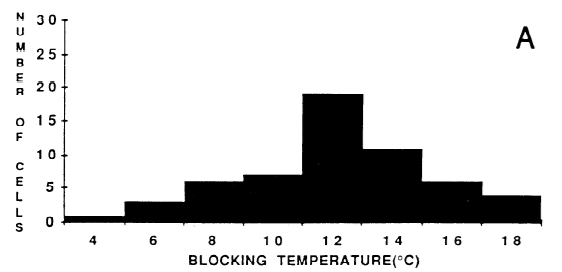
Cool them even further, and you can eventually knock out the ability of individual neurons to fire at all, even when artificially stimulated. The exact failure temperature varies by neuron, but averages around 12°C, and gets as low as 4°C (Girard and Bullier, 1989). Notably, 4°C is a temperature from which humans have recovered (Zafren 2020).
In short, I’d argue that in a person undergoing routine HCA, the occasional solitary neuron may send off sparks, but it’s clear these chilled, oxygen-starved neurons are almost entirely silent, are unable to communicate with each other over long distances, and that the ordinary dynamics of electrical cascades in the brain—and whatever information those dynamics held—have been totally disrupted.
Known unknowns
When I look at the state of the evidence, I find it implausible that we live in the inconvenient world of Chiang’s aliens. Instead, I seem to observe a world where the electrical cascades in the brain can be disrupted and zeroed out, but as long as the structure is intact, latent cognition remains intact. (For what it’s worth, “memory is structural” is also the conventional view among neuroscientists.)
This is why Nectome has put so much energy into preserving nanostructure in exquisite detail. There’s a lot we don’t know about the human brain, but whatever secrets it holds, the evidence points to them being stored in its intricate physical structures. We can’t decipher them yet—but we can make sure the structure is right there, ready for the future.
Charles Drew was one of the pioneers of HCA; and I’m sure, regardless of what’s been written after that fact, that he had to fight to make the idea happen; progress requires people to stand up and do the “obvious” often at significant personal expense.
I’ve spent some more time reading into the electrophysiological literature, and I’d value your perspective on a remaining concern.
It seems clear that the precise intra- and extracellular ion concentrations around each neuron are important for its electrical behavior. Even small, physiologically plausible changes in the extracellular fluid (for example, switching from native human cerebrospinal fluid to a standard artificial CSF solution) have been shown to alter resting membrane potential, firing threshold, spontaneous firing rate, and overall network dynamics in brain slices.
In that light, I wonder whether it is realistic to expect that simply replacing the original brain fluid with a standardized solution would allow a reconstructed or repaired neuron to fire at precisely the same moments and under the same conditions as before. In a network of billions of interconnected neurons, even modest shifts in excitability could change how electrical activity propagates through the system.
To illustrate my thinking, I keep coming back to an analogy with a precisely measured 1.526472652 V AA battery. If one were to wash away its original electrolyte, preserve the empty shell, confirm perfect structural preservation via electron microscopy, and then refill it with a standard electrolyte mixture that produces, say, 1.500000000 V, the result would still be a fully functional battery of the original size and shape. Yet its electrical properties would no longer be identical to the pre-wash state. In a complex circuit, that small difference could matter.
Neurons, of course, are far more sophisticated than batteries — they are living cells capable of homeostatic adjustment. Still, they achieve their remarkable function by propagating electrical signals through an orchestra-like harmony across vast networks.
Replacing or removing the original brain fluid in a healthy living brain (or during a preservation process) therefore seems likely to alter the network’s original capabilities, at least to some degree.
I’d be very interested to hear how Nectome thinks about this aspect — particularly how future reconstruction or emulation would ensure that the dynamic electrical properties and precise firing behavior of the original network are faithfully recovered from the preserved static structure.
Looking forward to your thoughts!
Thank you for the great article. Is it in your opinion irrelevant whether the “ion bags” empty out during chemical preservation, changing the electrochemical properties of the neuron during chemical preservation but leaving the observable structure intact?
Compare preserving an AA battery which has a voltage of -say- 1.516472762 Volt before preservation. All ion chemicals leave the battery during preservation, leaving the structure behind which can be viewed by electron microscopy to be perfectly preserved. However, post-preservation this AA battery will never produce 1.516472762 Volt anymore, the structure having been preserved being irrelevant compared to it’s electrochemical properties.
What’s your opinion?